
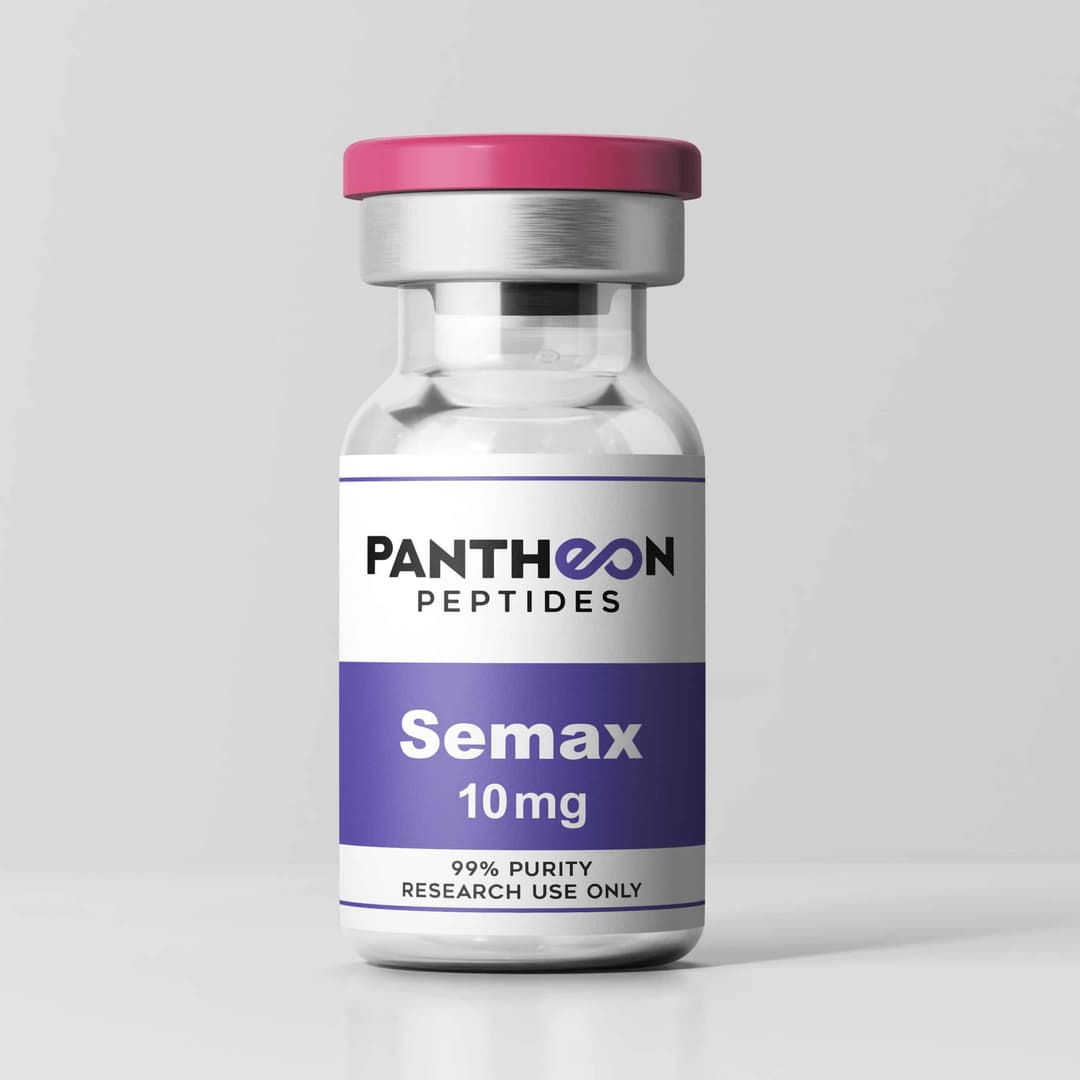
Semax
Neuropeptide analog studied for focus, memory, and neuroprotection.
What Is Semax?
Semax is a synthetic heptapeptide analog of ACTH (adrenocorticotropic hormone) developed in Russia and studied extensively for neuroprotective and nootropic effects. Studies show it may improve focus, memory, and mental clarity while reducing mental fatigue. It works by modulating BDNF and other neurotrophic factors.
🔬 Mechanism of Action
Semax is a synthetic heptapeptide analog of the adrenocorticotropic hormone fragment ACTH(4-7), extended with the C-terminal sequence Pro-Gly-Pro to confer resistance to enzymatic degradation. Its primary studied mechanism is upregulation of brain-derived neurotrophic factor (BDNF) and its receptor TrkB in the hippocampus and cortex, promoting neuronal survival, synaptic plasticity, and neurogenesis. Semax also modulates dopaminergic, serotonergic, and cholinergic systems and has been studied for its effects on cerebral blood flow and ischemia-related neuroprotection.
Effectiveness Profile
Relative effectiveness scores derived from published preclinical literature across key endpoints.
Scores are qualitative aggregates from animal and in vitro studies and are not a medical claim. For educational purposes only.
Applications & Benefits
Key Study Findings
Shown to markedly upregulate BDNF expression in hippocampal and cortical neurons within hours of intranasal administration in rodents
Demonstrates neuroprotective effects in rodent models of ischemia, reducing infarct volume and improving behavioral outcomes
Modulates expression of genes involved in dopamine and serotonin neurotransmission in rat brain studies
Approved and used clinically in Russia for stroke rehabilitation and cognitive disorders, providing translational laboratory context
Intranasal delivery studied as a route for CNS targeting without systemic injection in multiple pharmacokinetic investigations
Effect Timeline
Expected milestones based on published preclinical data.
Rapid increase in BDNF and NGF levels in preclinical models. Acute improvements in focus and cognitive clarity reported.
Measurable cognitive performance improvements. Dopamine and serotonin modulation stabilizes; memory encoding improves.
Neuroprotective markers stabilize at elevated levels. Mental resilience and sustained attention improvements in preclinical models.
Long-term neuroplasticity improvements measurable. Sustained BDNF elevation supports synaptic density and long-term cognitive benefits.
Rapid increase in BDNF and NGF levels in preclinical models. Acute improvements in focus and cognitive clarity reported.
Measurable cognitive performance improvements. Dopamine and serotonin modulation stabilizes; memory encoding improves.
Neuroprotective markers stabilize at elevated levels. Mental resilience and sustained attention improvements in preclinical models.
Long-term neuroplasticity improvements measurable. Sustained BDNF elevation supports synaptic density and long-term cognitive benefits.
Timelines are derived from preclinical animal studies. Individual results in laboratory settings may vary. For educational purposes only.
Dosing Protocol
Dosing information is derived from published animal studies and is provided for educational purposes only.
Reconstitution Calculator
Calculate exact BAC water volume and dose measurements for Semax.
For laboratory use only. This calculator is a reference tool — verify all calculations before use. Always use sterile technique with bacteriostatic water and sterile syringes.
Synergistic Stack Combinations
Key Scientific Literature
Semax, an analogue of ACTH, affects the expression of BDNF
Key finding: Semax increased BDNF gene expression and protein levels in rodent brain, supporting neuroprotective and nootropic effects.
The effects of Semax on the outcome of carotid endarterectomy
Key finding: Semax demonstrated neuroprotective effects and improved neurological outcomes following cerebrovascular events.
Citations reference published peer-reviewed studies. This is not a complete literature review. All studies were conducted in preclinical or controlled clinical settings. Content is for educational reference only.
Frequently Asked Questions
What is the origin of semax and how does it differ from ACTH?
Semax was developed by the Institute of Molecular Genetics of the Russian Academy of Sciences as a stable synthetic derivative of the ACTH(4-7) sequence (Met-Glu-His-Phe). The addition of the C-terminal Pro-Gly-Pro tripeptide confers resistance to peptidase degradation while removing the endocrine activities of the full ACTH molecule. Semax retains and amplifies the cognitive-enhancing and neuroprotective properties of the ACTH fragment without affecting cortisol or adrenal function.
Why is semax typically administered intranasally?
Intranasal delivery allows peptides to bypass the blood-brain barrier via direct olfactory and trigeminal nerve pathways, delivering drug directly to the CNS without requiring systemic exposure. Semax's intranasal formulation is a central part of its clinical use profile in Russia. Studies show measurable BDNF upregulation in brain tissue following intranasal administration, confirming CNS penetration via this route.
What neurotransmitter systems does semax modulate?
Studies have demonstrated that semax influences expression of genes involved in dopaminergic, serotonergic, cholinergic, and glutamatergic neurotransmission. It upregulates BDNF and TrkB receptor expression most prominently, but also modulates tryptophan hydroxylase (serotonin synthesis) and tyrosine hydroxylase (dopamine synthesis) activity in rodent brain studies. This multi-system activity contributes to interest in its nootropic and neuroprotective profile.
Related Topics
Semax
For educational use only · Verified vendor
Available In Bundles
Quality Assurance
Related Guides
Selank
Anxiolytic peptide studied for anxiety reduction, mood, and cognitive enhancement.
Cerebrolysin
Neuropeptide mixture studied for cognitive enhancement, neuroprotection, and brain injury recovery.
DSIP
Delta sleep-inducing peptide — studied for deep sleep restoration, stress hormone regulation, and circadian rhythm support.